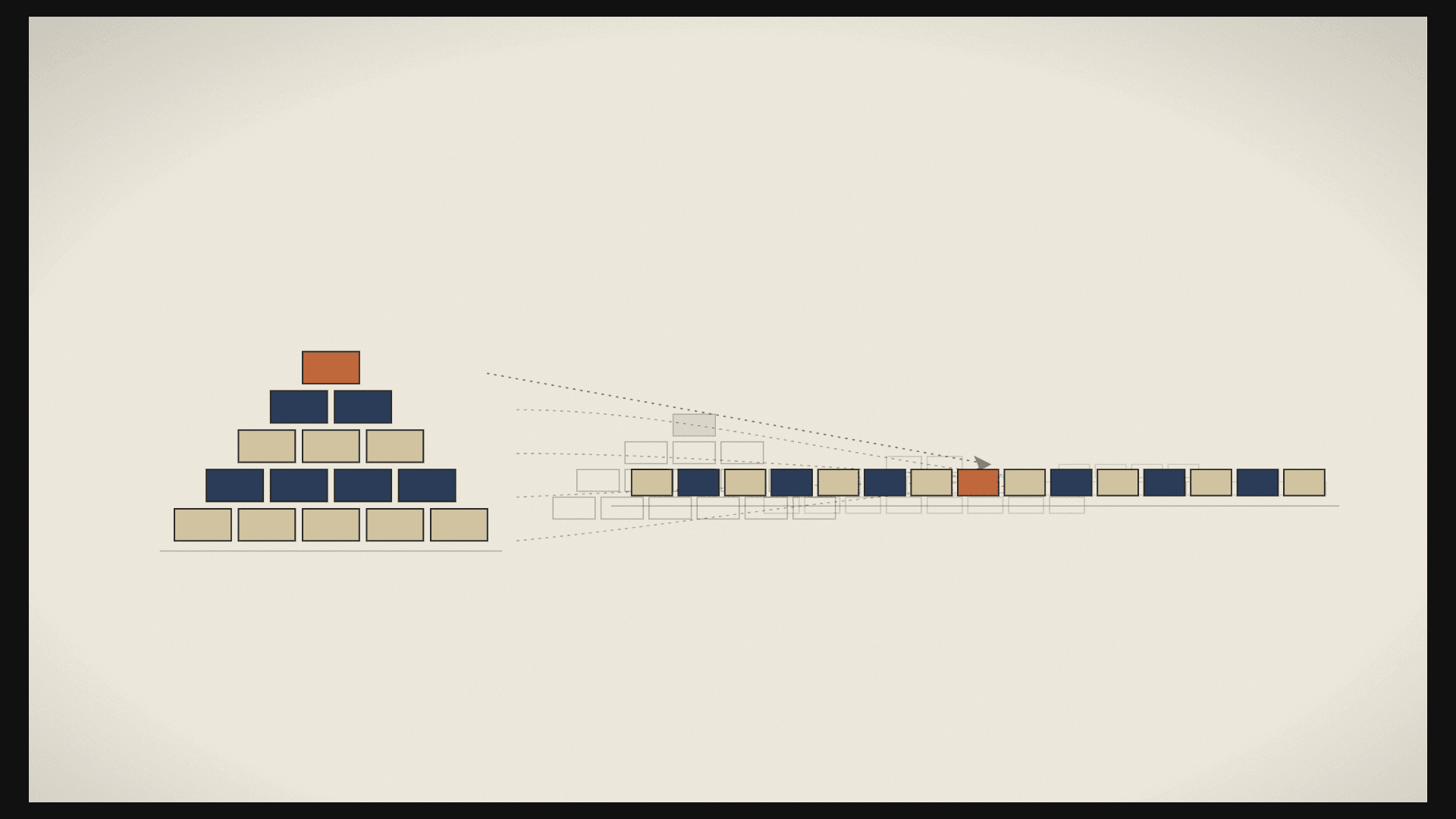
Are CEOs already thinking about org restructures? The honest answer: yours probably is.
Every other founder you know is quietly running the math. Some have already done it. Some are watching their board paper-shuffle a deck. A few are pretending they're not.
The numbers aren't subtle. In the first five months of 2026, 92,000 tech workers were laid off, most of them under the word "restructuring" rather than performance cuts. Block went from 10,000 employees to under 6,000 in March, the largest single AI-attributable cut on record.
Coinbase capped its org chart at five layers below the CEO. Every leader is now a "player-coach," meaning no more pure managers who just coordinate other people's output. Gartner estimates one in five companies will make middle management cuts of more than 50% by year-end.
What everyone's calling the 2026 org restructure
The phrase doing the rounds is the "Great Unbossing." Whether you call it that or AI org flattening, it's happening.
Fortune ran a piece in April about a tech VP of Engineering who now has 47 direct reports. Most CEOs aren't going that far. But they're all sliding in the same direction.
Look at which departments are getting touched. It's almost all of them. Engineering, obviously. Finance, where agentic tools are doing the FP&A work that used to take a five-person team.
Support, where the rep-to-customer ratio used to be 1:50 and is now 1:500. Even the C-suite. IBM's May 2026 study of 2,000 CEOs found that 77% say "talent and technology leadership roles are converging." Which is the corporate-speak version of "we're folding the CTO into the CHRO or vice versa."
The one function that survived the restructure
There's one function CEOs are restructuring around without restructuring. Hiring.
Think about your hiring stack. Most companies in your reference set still have the same setup they had in 2018.
A recruiter (internal or agency). A job board subscription. An ATS like Greenhouse or Lever sitting on top to track who applied.
Maybe a sourcing tool. Maybe an assessment platform. A pipeline that takes 44 days to fill on average. Each hire costs $4,700, and 75% of applicants get rejected on keyword match before any human reads a resume.
You restructured your engineering org so 30 people ship what 50 used to. You restructured your finance org so two people close the books in a week. And then you go to hire your next ten employees. You call a recruiter who charges 25% of first-year salary because "good people are hard to find."
Restructure-blindness: why hiring slipped through
The hiring function survived the restructure for a specific reason. It's the function least visible to the CEO on a normal Tuesday.
You see your engineering velocity. You see your CAC. You see your gross margin. You don't see your hiring pipeline until it breaks, and when it breaks, you panic-call a recruiter.
So the recruiter survives. The ATS survives because you bought it once and you'd have to migrate. The job board subscriptions renew on autopay.
This is what restructure-blindness looks like. Every other intermediary in your org got squeezed because you could see what they cost. The hiring intermediary stayed for a different reason. Its cost shows up as a one-off line item next to a new hire's offer letter, not as a fixed monthly drag.
If you're sitting where most founders are this year, try this on Friday afternoon. Add up what you actually spend on hiring (recruiter fees, ATS subscription, job boards, sourcing tools, internal time) and divide by hires last year. If that number isn't a fraction of the recruiter-led model that existed in 2018, you've restructured everything except this.
What a flat-org hiring stack looks like
There's a version of the hiring stack now that fits a flatter org. One tool. The hiring manager runs the process directly. AI does the resume screening and the first-round qualification.
No recruiter on retainer. No 25% placement fee. The founder or the engineering lead sees the four candidates worth seeing, talks to them, decides.
That's what we built Maazi for. We replaced the recruiter, not augmented them. If you've already flattened your org, the engineering lead is also the hiring manager. You don't need a tool that assumes a recruiter is in the loop.
The CEOs already restructuring around AI know this in their gut. The hiring restructure is the last one to come, and most haven't gotten to it yet because they haven't had a reason to look. Now that the rest of the org is flatter and faster, hiring sticks out as the one place that still runs like it's 2018.
Worth a look.